How do you differentiate malware from a virus? Malware is a collective term to summarize the different malicious software programs that decode other websites and software causing mayhem.
On the other hand, a virus is a more specific term to narrow the type of maliciousness of the replicating software by inserting its codes into other programs. The broad perspective of malicious and phishing codes disrupts and completely overhauls the functionality of the website over time. Malware has the effect of working gradually and generating its effect slowly.
The replication effect of the malware will include three main stages of causing attack and mayhem on a website. The stages include;
Attaching phase
Also known as the landing phase. The malware attaches itself and gets embodied on the parent website. The immediate ripple effect on the website could be small observable features of the attaching phase.
For instance, your website could behave funny by showing slow connections and reachability effect. In the above phase, the malware is observing the website security codes and security levels.
Replication phase
The malware begins to test its services effects on the website in the above phase. For example, the malware begins to implement the phishing codes on the parent website to disrupt its functionality. The replication phase involves testing the malware codes on the website.
This is because the malware has studied well the security features of the attaching phase. This replication phase. could be observed on the website when the website is not working appropriately and stops functioning on some tasks. If not acted upon on time, the replication phase leads to the destruction phase.
Destruction phase
It is the final phase of the malware process. The destruction phase involves a complete overhaul of the functionality of the website. In the final phase, the process is irreversible. The malware has full control of the website despite running other malware countering strategies.
Website Security Check
Checking your website for malware vulnerabilities is crucial to help you begin the fixing process. Website security check involves step by step process that could be summarized as below.
Planning
Before checking the security of your website you need to have a planning strategy. The planning stage is important because the website has functionality roles and checking your website without planning could result in disruption of the website's normal functionality.
Planning also helps you also employ the appropriate website checking methods without gambling on any of them. For instance, an e-commerce website processing payments has different security checking procedures compared to a general website that only has posting features.
Check Your Website
This is after finding the right security check procedures. It involves deploying the method on the website at hand. For clarity, it could involve running software security codes on the aforementioned website.
Interpreting the Website Security Check Results
Once the checking software has found the results, the interpretation phase follows suit immediately. This interpretation will lead to informing the website owner on the recovery process. Regarding the recovery process, there is a whole pack of software that could help in this regard as well.
Google Malware Checker
Google malware checker is a Google-enabled malware checking tool and that has software capable of finding results by analyzing the malware attack phase. The tool provided by Google is a web crawler that bots around the website and follows specific website security links to find out the damaging phase extent.
The checker informs the owner and stakeholders of the websites of where and when the malware process has advanced to. Key to note, the Google malware checker has functionalities that could allow it to act accordingly and decisively on the malware attack extent by halting the malware degeneration phase to averting it from proceeding to the destruction phase.
Quttera
Quttera is an online malware checker that is largely used by small and medium business website owners to rectify beaches on their websites. The Quttera software has tools involving scanning solutions and malware removal to help ease up the malware breach extent but at the same time keeping the website functionalities.
Quttera has proven to be the number one software used by the website owners to remedy the malware attack.
Finally
Employing the best website malware checking procedures in case of a malware attack is inevitable. Given the fact that restoring a website after a malware attack is not a walk in the park, investing in the best website security measures is paramount. A good malware recovery procedure will return the functionalities of your website and ensure restoration of your website.
Removal
Security stack layer 1
Malware Detect & Removal
Our malware detection scanning, preventive methods and removal enables you to take a proactive approach to protect the business and brand reputation from malware attacks and infections.
- Unsuspecting websites get infected with malicious code.
- Continuous website monitoring to detect any incidents.
- Identify and remediate the cause to hardening your websites.
Comodo cWatch Web can identify malware, provide the tools and methods to remove it, and help to prevent future malware attacks at the edge before it hits the network, included as a paid member.
By clicking the button below, I agree to the Terms of Service and Privacy Policy. Already have an cWatch account? Sign in here
Response
Security stack layer 5
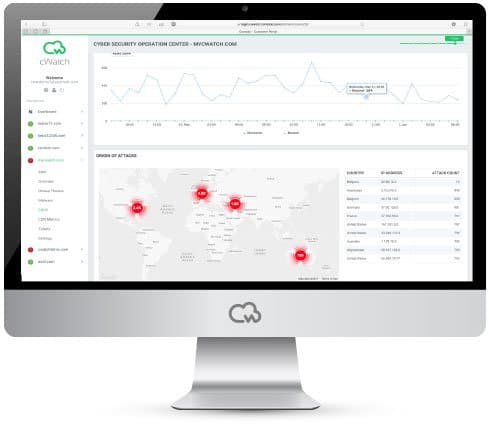
Cyber Security Operations Center
Our exclusive C.S.O.C. is staffed with certified security analysts to monitor, assess and defend websites, applications, databases, data centers, servers, networks, desktops and other endpoints.
- 24 / 7 / 365 security monitoring using state-of-the-art tech.
- Engage clients of complex threats to resolve the issue.
- Real-time web traffic monitoring and proactive incident fixes.
C.S.O.C. checks for threats, identifies and analysis then performs the necessary actions to resolve the issue while offloading costs of in-house experts by using stack layer 3 to handle the heavy lifting.
By clicking the button below, I agree to the Terms of Service and Privacy Policy. Already have an cWatch account? Sign in here

Intelligence
Security stack layer 3
Security Information • Event Management
S.I.E.M. collects logs and events the network traffic and web assets, security devices, operating systems, applications, databases, and reviews the vulnerabilities using artificial intelligence to process.
- Reduces billions of events into prioritized threats real-time.
- Identifies changes in network behavior with activity baselines.
- Flows data searches in real-time streaming or historical mode.
S.I.E.M. senses and tracks significant threats to links to all online supporting data and context for easier investigation. While anomaly detection to identify changes associated with the network safety.
By clicking the button below, I agree to the Terms of Service and Privacy Policy. Already have an cWatch account? Sign in here
Prevention
Security stack layer 4
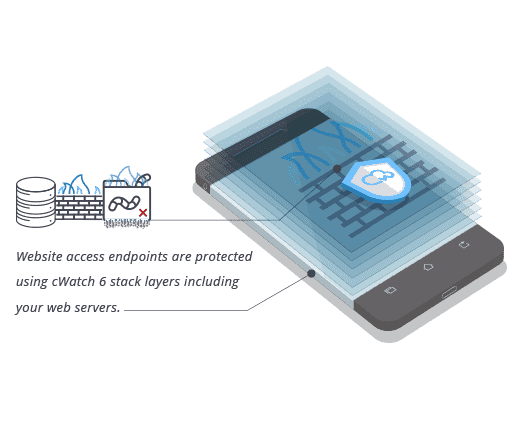
Web Application Firewall
W.A.F. by Comodo eliminates application vulnerabilities to protect websites and web applications against advanced attacks including Denial-of-Service (DDoS), SQL Injection and Cross-Site Scripting.
- Destroys malicious requests and thwart hack attempts.
- Protection to account registration forms and login pages.
- Malicious bots and brute force attacks are block and patched.
Combined with malware scanning, vulnerability scanning and automatic virtual patching and hardening engines provides robust security is fully managed for Comodo cWatch Web customers.
By clicking the button below, I agree to the Terms of Service and Privacy Policy. Already have an cWatch account? Sign in here
Performance
Security stack layer 2
Add a network of globally distributed servers designed to boost the speed for websites and web applications by transferring content to your user based on their proximity to the nearest CDN web server.
- Proven to increase search engine rankings and site scores.
- 29 worldwide CDN node locations to reach your users.
- Save your bandwidth by leveraging CDN browser caching.
CDN serves your users your website content with virtually unlimited capacity. Giving you the freedom to focus less on site maintenance, more on scaling the uptime of your traffic and target audience.
By clicking the button below, I agree to the Terms of Service and Privacy Policy. Already have an cWatch account? Sign in here

Compliance
Security stack layer 6
Payment Card Industry • Data Security Standard
PCI • DSS ensures that your customers' cardholder info is kept secure from security breaches through a meticulous scan of your network and applications to identify and fix security vulnerabilities.
- Simple and automated way to stay compliant with PCI • DSS.
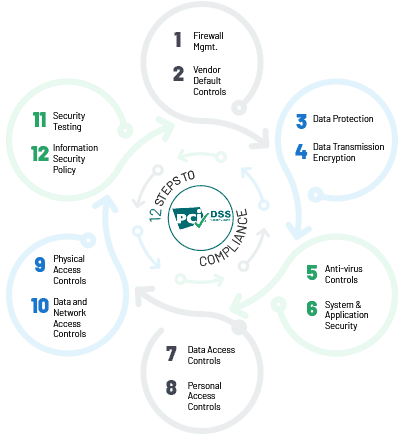
- Pass the requirements for the 12 points PCI • DSS standard.
- Schedule on-demand PCI scans to report quarterly results.
Establishes and implements a firewall, hardens your environment, disables unnecessary services & configures system parameters to prevent misuse, ensures system audit components are protected.
By clicking the button below, I agree to the Terms of Service and Privacy Policy. Already have an cWatch account? Sign in here
© 2026 Comodo Security Solutions, Inc